Crop observation and consulting preparation
Turn crop observations into a useful timeline
By HealthTrainX editorial team · Reviewed October 14, 2026 · About 3 minutes to read

A photograph captures one moment. A dated observation record helps you explain what changed before and after that moment. It can make a discussion with a qualified agronomist or diagnostic service more useful, without pretending that a photograph alone proves a cause.
Give each observation an identity
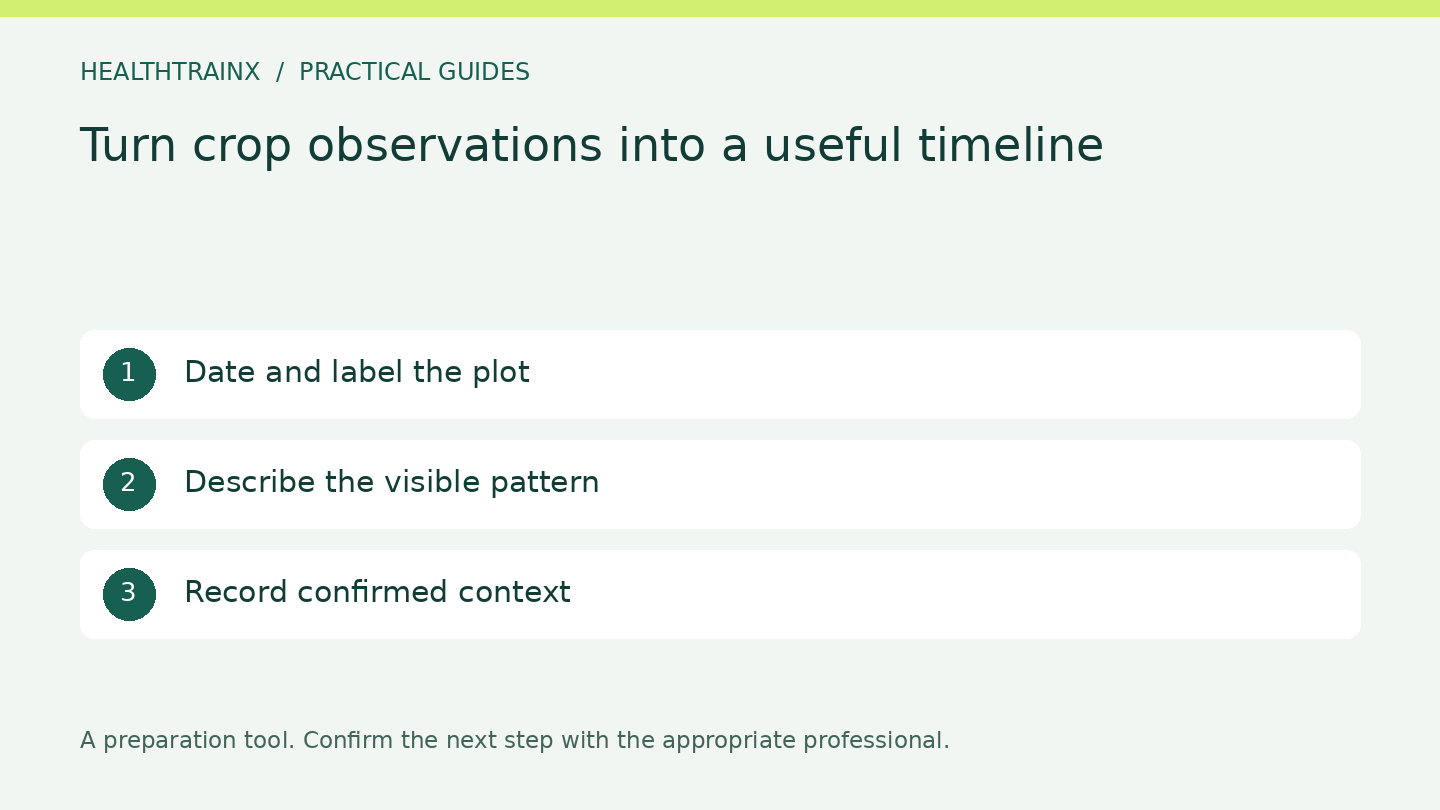
Use a simple field or plot label and record the date. Note the crop and the part of the plant you are observing. Keep the original image and link it to that entry. Avoid publishing exact farm coordinates or personal contact details when a general location will do.
Describe what you actually saw
Separate observation from interpretation. “Yellowing on several lower leaves near the field edge” describes a pattern; naming a disease before it is assessed introduces an assumption. Note whether the same appearance is scattered or concentrated in one area.
Add the relevant history
Record when you first noticed the change and any relevant weather, irrigation or recent field operations you can confirm. If you do not know, say so. University of Minnesota Extension notes that photographs and context affect assessment and that further information or samples may be needed.
| Date / plot | Observation | Photo | Relevant confirmed context |
|---|---|---|---|
Try a neutral sample entry
For example: “12 October, plot B, maize: lower leaves show pale patches near the west edge; photos B-01 to B-03; irrigation ran yesterday according to the operations log; cause unknown.” This is a fictional example, not a diagnosis. A later entry can describe whether the pattern expanded, stayed similar or became difficult to compare because the lighting changed.
Keep the original entry intact. If you later learn that a recorded date was wrong, add a correction rather than silently rewriting the timeline. A separate column for “question for adviser” prevents an early guess from becoming an apparent fact in the record.
Follow the same question over time
When revisiting an area, keep the label consistent. Note whether the visible pattern changed and what actions actually occurred between entries. This record helps organize evidence; it does not establish that a product or intervention caused an improvement.
For image preparation, use our existing crop-photo checklist. To discuss scope, visit crop and agriculture consulting or contact HealthTrainX. Return to the homepage.
Sources and review date
Source checked 14 October 2026. Educational field-recording guide; not a crop diagnosis or a prescribed treatment. By HealthTrainX editorial team.
Leave a Reply