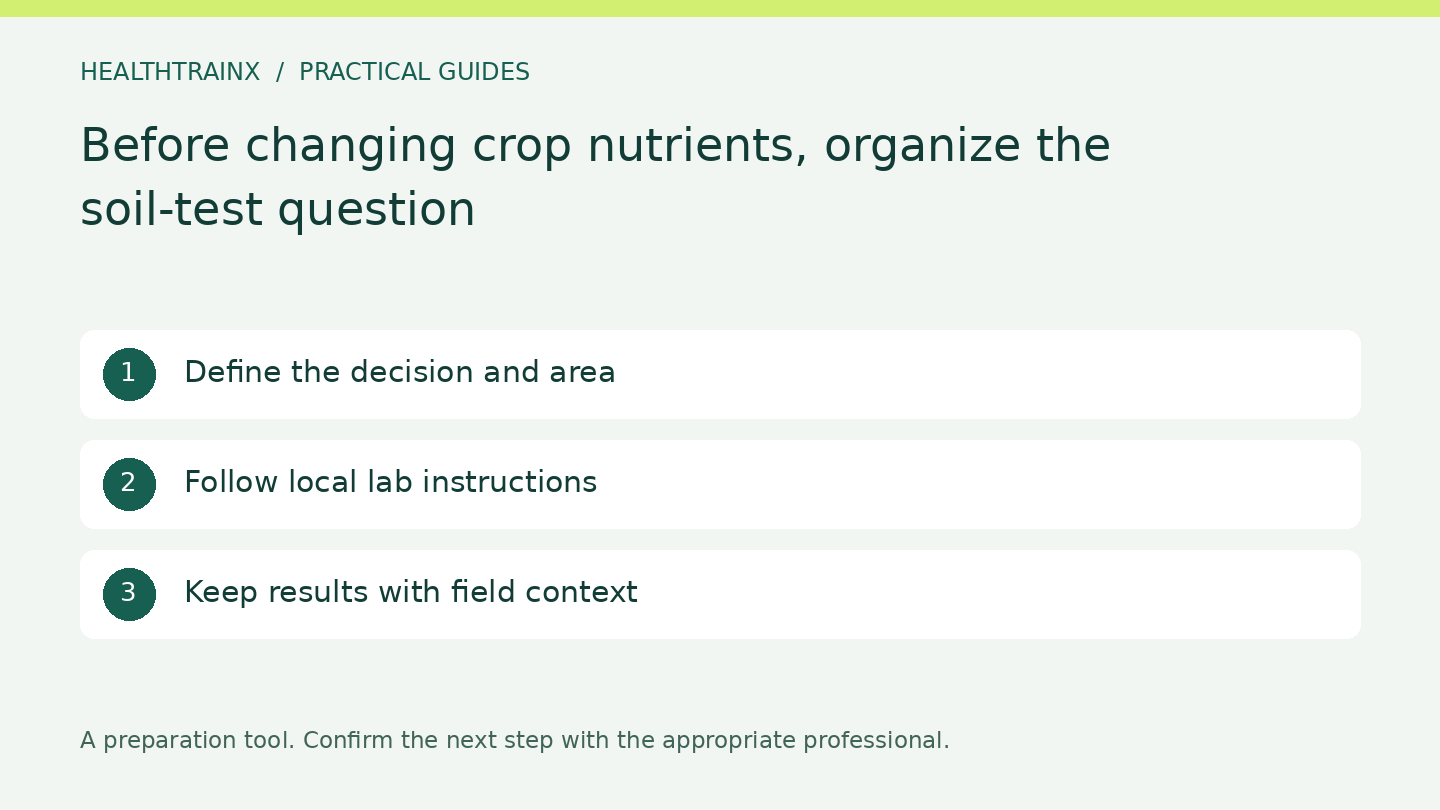
Before changing crop nutrients, organize the soil-test question
By HealthTrainX editorial team · Published October 17, 2026

Uneven plant growth can make a quick product recommendation tempting. A more useful first question is what evidence would help assess the situation. Soil testing may contribute information about the sampled soil, but it does not, by itself, explain every visible plant problem.
Define the decision before collecting a sample
Write down what you are trying to decide: for example, how to discuss a nutrient-management plan with an adviser. Identify the field, bed or management area using a consistent label. Keep areas with meaningfully different histories separate in your notes, and ask the laboratory whether they require separate samples.
Ask the laboratory for its procedure
Sampling depth, number of subsamples, containers and timing can depend on the test and setting. Use the chosen laboratory’s instructions rather than copying a generic depth from a post. Ask how to avoid contamination, what information must accompany the sample and which tests answer your question. If you already collected a sample differently, disclose that before relying on the result.
Record context alongside the result
University of Minnesota Extension describes soil tests as useful for information such as pH and selected nutrients, with recommendations tied to the intended use. Its regional advice should not be treated as a universal prescription. Ask a local adviser to interpret the laboratory’s units, methods and recommendations for your crop and location.
| Record | Why it helps |
|---|---|
| Area label and collection date | Connects the result to the sampled place and time |
| Laboratory procedure followed | Documents how the sample was prepared |
| Crop and confirmed recent operations | Provides context for interpretation |
| Result, units and open questions | Keeps the report distinct from your assumptions |
Avoid turning a single number into a treatment claim
A report is not proof that a particular product will solve a problem or increase yield. If an adviser recommends an action, record the rationale and any follow-up observations requested. Where symptoms need separate assessment, use suitable photographs and ask whether plant diagnostic testing is also relevant.
Begin with our crop-photo checklist for visual observations. For questions about service scope, visit crop and agriculture consulting or contact HealthTrainX. Bring your local laboratory report to the appropriate adviser instead of applying a generic online nutrient rate.
Sources and review date
Ask about a crop technology review
Share a brief question without exact farm coordinates or confidential records. Any paid work requires an agreed scope and confirmed quotation. A technology review does not replace local laboratory or qualified agronomic advice.